Preparing for the NCLEX-RN or studying anatomy and physiology? Understanding the 12 cranial nerves is essential for neurological assessment and nursing practice. This guide explains the names, functions, and classifications of each cranial nerve using easy-to-remember mnemonics and a detailed anatomy chart. Whether you’re a nursing student, medical student, or healthcare professional, these NCLEX study notes will help you master cranial nerve anatomy and function.
What Are the 12 Cranial Nerves?
Explain that cranial nerves originate directly from the brain and brainstem and control sensory, motor, and autonomic functions.
List of the 12 Cranial Nerves
| CN | Name | Main Function |
|---|---|---|
| I | Olfactory | Smell |
| II | Optic | Vision |
| III | Oculomotor | Eye movement, pupil constriction |
| IV | Trochlear | Superior oblique muscle |
| V | Trigeminal | Facial sensation and chewing |
| VI | Abducens | Lateral eye movement |
| VII | Facial | Facial expression, taste (anterior 2/3) |
| VIII | Vestibulocochlear | Hearing and balance |
| IX | Glossopharyngeal | Taste (posterior 1/3), swallowing |
| X | Vagus | Voice, swallowing, parasympathetic control |
| XI | Accessory | Shoulder shrug and head rotation |
| XII | Hypoglossal | Tongue movement |
Cranial Nerves Mnemonic
Names
On Old Olympus Towering Tops, A Finn And German Viewed Some Hops
Functions
(Sensory, Motor, Both) Some Say Marry Money, But My Brother Says Big Brains Matter More
Why Are Cranial Nerves Important for the NCLEX?
The NCLEX frequently tests cranial nerve anatomy during neurological assessments. Nurses should know which cranial nerve controls vision, eye movement, facial sensation, swallowing, hearing, balance, tongue movement, and parasympathetic functions.
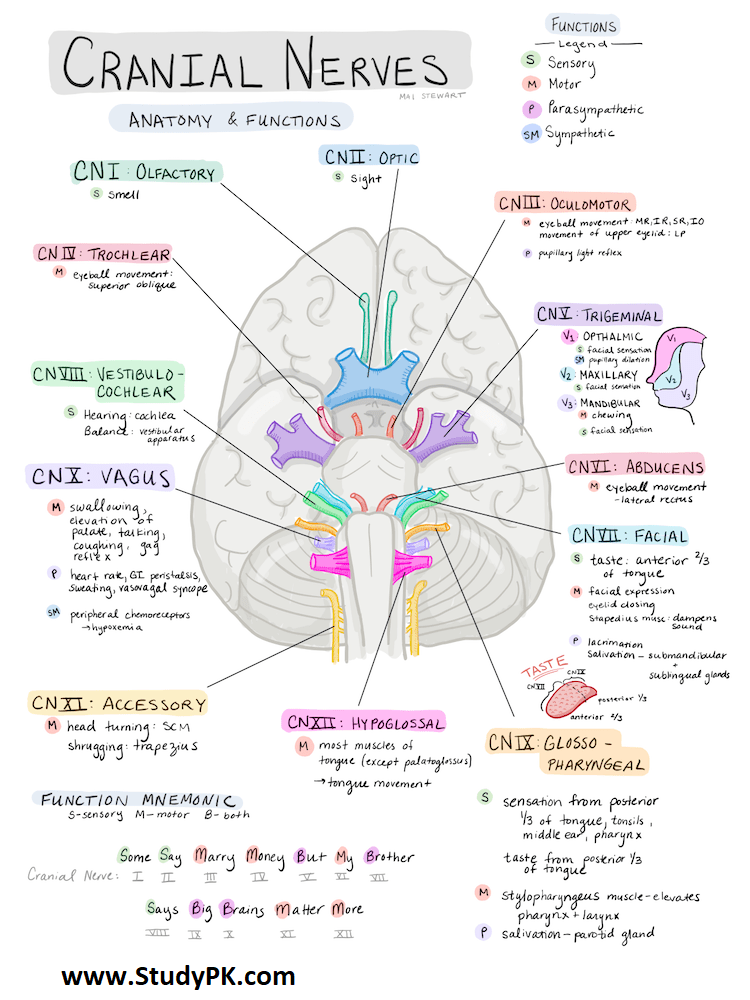
The 12 cranial nerves originate from the brain and brainstem and control smell, vision, eye movement, facial sensation, hearing, swallowing, tongue movement, and autonomic functions.
On Old Olympus Towering Tops, A Finn And German Viewed Some Hops helps remember the names of all 12 cranial nerves.
Use the mnemonic:
Some Say Marry Money, But My Brother Says Big Brains Matter More
Joni F says
This is fantastic. I’m a PT student and am putting together various illustrations for the brain for easier studying and cross-referencing. Thank you for making something that is easy to look at but so informative!!